
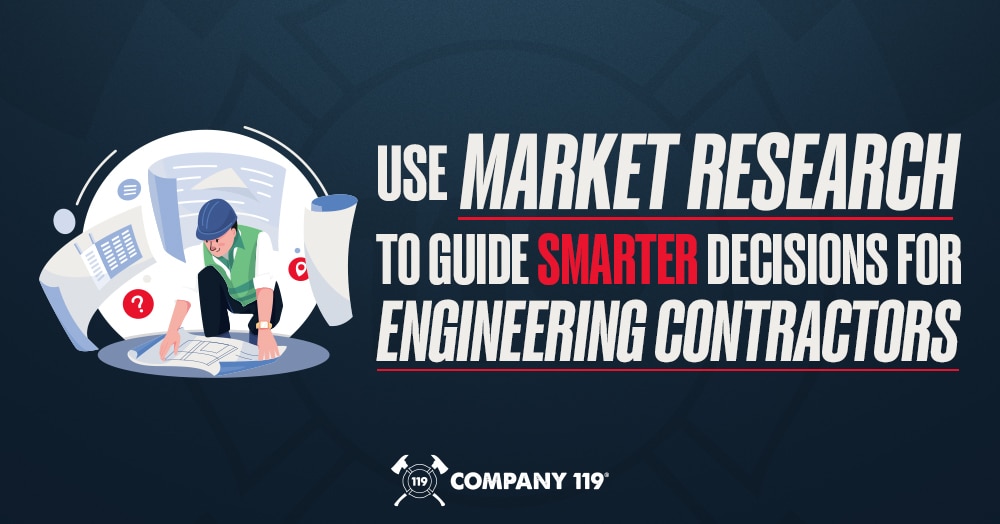
If you’re an engineering contractor trying to grow in today’s competitive market, guesswork won’t cut it. To win more bids, break into new commercial markets, and stay ahead of the curve, you can’t rely on gut feeling alone. You need insights rooted in real data. That’s where market research steps in.
Market research isn’t just for big corporations with massive budgets—it’s your secret weapon for smarter decision-making. From identifying growth opportunities to understanding how clients perceive your firm, research helps you build a strategy that actually works. So, how can you use market research to uncover trends, conduct meaningful client perception studies, and make strategic moves that give you a real edge in the bidding process? Let’s dive in.
Market research involves gathering and analyzing information about your industry, competitors, clients, and market trends to make smarter business decisions. For engineering contractors, especially in AEC marketing, it means understanding where demand is growing, what commercial clients are really looking for, and how your services stack up against the competition.
This isn’t about guesswork. Instead, it’s about using facts to guide your next move. Market research can help you identify which sectors are ramping up (think healthcare, data centers, infrastructure), what pain points your clients are facing, and even why you might be losing bids. It gives you the clarity to finetune your services, pricing, marketing, and business development strategies with confidence. In short: it’s intel that helps you work smarter, not harder—and win more of the right projects.
Market research isn’t a one-time effort; it’s an ongoing process that helps you stay competitive, informed, and ready to adapt. Whether you’re looking to expand into new commercial sectors or simply win more of the right jobs, it starts with asking the right questions—and knowing where to find the answers.
Here’s how to put market research to work, from gathering data and analyzing trends to using client feedback to sharpen your competitive edge.
Start by focusing on both industry-wide trends and your specific market segment. Look at construction industry reports, building permit data, commercial real estate forecasts, and local economic development plans. Associations like the American Council of Engineering Companies (ACEC), Dodge Data & Analytics, and local planning departments publish valuable insights. These resources can reveal which commercial sectors are growing—like logistics facilities, healthcare, or green infrastructure—and where to target your business development efforts.
Don’t forget about your competitors. Analyze their project types, clients, and partnerships. What kinds of bids are they winning? What services are they highlighting? Tools like LinkedIn, project databases, and even job postings can give you clues about how competitors are positioning themselves. This kind of competitive intelligence helps you identify gaps in the market or opportunities to differentiate your offerings.
Before you dive into third-party reports or external surveys, take a closer look at what’s already inside your business. Your past bids, client interactions, project outcomes, and win/loss rates can reveal a lot. Review which types of projects you’re consistently winning—or losing—and why. Look for patterns in client types, timelines, locations, and budget ranges.
Talk to your project managers and business development team. They’re on the front lines and have key insights into client behavior and market shifts. Their observations, paired with actual project data, can help you zero in on which types of jobs are most profitable, which sectors offer room for growth, and where your team is already delivering standout results.
Your clients can be one of your best sources of insight, but only if you take the time to ask the right questions. A client perception study involves reaching out to past or current clients to understand how they view your firm, what they value most, and where there’s room for improvement. This can be done through anonymous surveys, interviews, or even informal check-in calls.
Keep it simple, but strategic. Ask questions like: What made you choose us? What almost made you go elsewhere? How would you rate our communication and project delivery? The goal is to uncover patterns—what you’re doing well, where you’re falling short, and what really matters to your clients when they’re choosing a contractor. This kind of feedback is unmatched when it comes to improving your proposal process, refining your AEC marketing strategy, and building long-term relationships.
Sure, national construction trends are helpful, but the real opportunities lie in your local market. Keep a pulse on what’s happening in your region by monitoring planning commission meetings, zoning updates, commercial developments, and public infrastructure announcements. These sources often signal upcoming projects before they hit the mainstream radar.
Build relationships with local economic development agencies, commercial realtors, and architects. These stakeholders can give you informal insights into what sectors are expanding—like biotech, warehousing, or multi-use developments—and help you position yourself early in the conversation. Staying proactive here can lead to being on the shortlist before RFPs are even published.
You don’t need to be a data scientist to make sense of your research. There are plenty of tools out there that can help you organize and visualize your findings. Excel or Google Sheets work great for tracking trends and project data. For deeper insights, tools like Power BI, Tableau, or even CRM systems like HubSpot or Salesforce can help you spot patterns over time.
Your goal is to not just collect data, but to revisit it regularly. Set up dashboards or visual summaries that let you quickly assess what’s changing in the market and how your business is tracking. These insights can inform your quarterly planning, guide your engineering marketing efforts, and help you adapt before your competitors do.
Once you’ve gathered your data, it’s time to turn it into actionable insights. Look for recurring themes or gaps. Are clients consistently praising your speed but pointing out a lack of proactive communication? Are certain commercial sectors experiencing rapid growth in your region while your current focus is lagging?
Create a simple matrix of opportunities versus capabilities. Where do market demands align with your strengths? Where might you need to invest—whether in new hires, certifications, or technology—to meet emerging demand? These insights can shape everything from your business development targets and service offerings to the language you use in proposals.
Market research is non-negotiable if you want to stay competitive, win more bids, and grow strategically in the AEC space. From uncovering industry trends to understanding how clients really see your firm, the insights you gain can drive sharper, more confident business decisions.
At Company 119, we specialize in marketing for engineering companies—and market research is a key part of that. Whether you need help gathering data, running client perception surveys, or translating insights into strategy, we’ve got the tools and expertise to help you grow. Let’s work together to build a smarter, stronger foundation for your next big move. Reach out today to get started.