
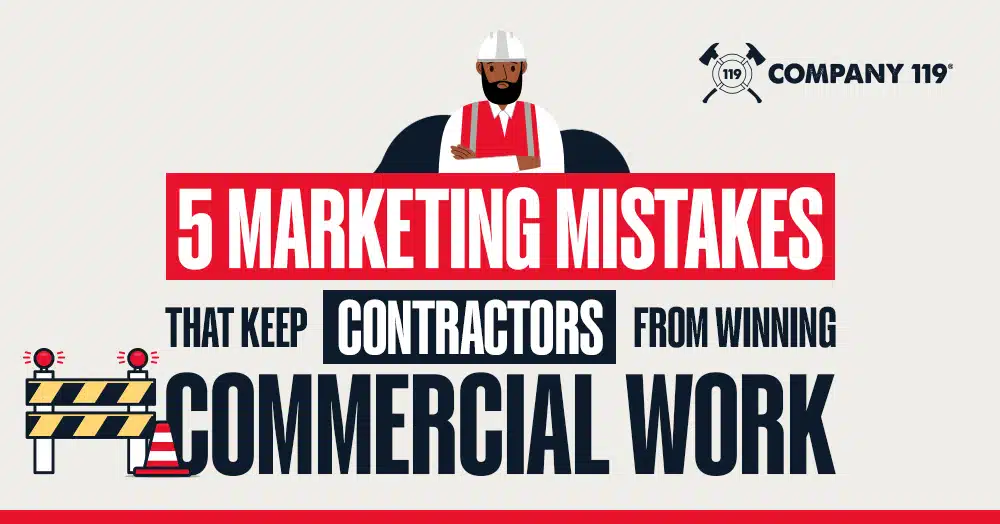
Breaking into the commercial contracting space isn’t just about having the skills or the crew to get the job done—it’s about making sure the right people know you can do it. But here’s the catch: a lot of contractors shoot themselves in the foot before they even get in the door. Whether it’s wasting time on the wrong audience or completely ghosting on their online presence, these marketing missteps can keep even the most capable pros stuck on the sidelines.
If you’re serious about landing bigger commercial projects, you need more than word-of-mouth and a decent portfolio. We’re calling out the top five marketing mistakes contractors make when trying to break into the commercial world—and how to steer clear of them. Here’s how to get more business as a contractor and win the work you actually want.
The Mistake: Too many contractors approach marketing with a “more is better” mindset—more exposure, more eyeballs, more general messaging. The problem? Commercial projects require a targeted strategy, not a shotgun approach.
If you’re promoting your services to homeowners or using language that speaks to residential work, you’re not going to catch the attention of commercial decision-makers. They have different concerns, timelines, and expectations. When you’re not speaking directly to their needs, they move on to someone who is.
The Fix: Start by defining who your ideal commercial client actually is. Are you going after general contractors who need subs, developers looking for a reliable team, or property managers who need consistent upkeep and renovations? Once you know who you’re talking to, you can create messaging that directly addresses their pain points, goals, and expectations.
Use industry-specific terms, showcase relevant project experience, and highlight your ability to meet commercial standards. This instantly shows you understand their world and aren’t just another contractor dabbling in commercial work. The more tailored your commercial contractor marketing strategy, the more likely you are to get noticed.
The Mistake: It’s easy to assume that your work quality will set you apart. Sure, skill matters, but it’s not enough on its own. The commercial space is competitive, and there are plenty of contractors out there with solid portfolios and reliable teams.
If you don’t understand who you’re up against, you risk blending into a sea of similar bids and proposals. Even worse, you might price yourself out of the game or fail to highlight what makes you the smarter choice. Overconfidence can cost you real opportunities—especially in contractor marketing, where standing out is everything.
The Fix: Take time to research your top competitors. Look at their websites, check out what they’re posting on social media, and read their reviews. What services do they emphasize? What language are they using? This gives you a benchmark to compare your own marketing and messaging.
Then, identify your unique value proposition and make it loud and clear. Do you specialize in a specific type of commercial job? Have a faster turnaround or a better safety record? Do you use tech to streamline communication? Whatever makes your company stand out, make it the focus of your marketing. Commercial clients want to know why you’re better, not just that you’re available.
The Mistake: Some contractors still treat online marketing like an afterthought. They rely on word-of-mouth, outdated flyers, or a phone number scribbled on the side of a truck. But here’s the reality: commercial clients will Google you.
If they find nothing—or worse, an outdated or unprofessional website—they’re going to assume you’re not ready for serious projects. In today’s market, your digital presence isn’t optional. It’s your first impression.
The Fix: Start with the basics: a clean, professional website that’s easy to navigate and clearly outlines your services, experience, and past projects. Include testimonials, certifications, and high-quality photos. This builds credibility and trust before a potential client even picks up the phone.
From there, build out your digital footprint. Claim your Google Business profile, stay active on LinkedIn, and consider posting project updates or behind-the-scenes content. Even simple things (think: regularly updating your website or sharing progress photos) can make your company look more established and engaged. When it comes to digital marketing for contractors, perception matters, and a strong digital presence can tip the scales in your favor.
The Mistake: Countless contractors focus solely on chasing new leads or waiting for public RFPs, hoping something will stick. While that’s one way to land work, it’s often the slowest and most competitive path.
What gets overlooked is the value of real relationships in the commercial world. People like to work with contractors they know and trust, especially for high-stakes projects. If you’re not building and maintaining connections, you’re leaving a lot of opportunity on the table.
The Fix: Shift some of your energy from cold outreach to relationship-building. That means following up with past clients, connecting with industry professionals on LinkedIn, and attending networking events or trade shows where decision-makers gather. Even a quick check-in email or sharing a helpful article can keep you top of mind. This kind of consistent, personal engagement is a key part of effective marketing to contractors and commercial stakeholders.
The goal is to become a trusted name in your space, not just another bidder. When you’re seen as a reliable partner instead of a random contractor, you’ll find more doors open up naturally. Relationships create referrals, repeat business, and insider invites to bid before a project hits the public radar. In commercial work, who you know—and how well they know you—can make all the difference.
The Mistake: Take a quick scan of contractor websites or proposals, and you’ll see a lot of the same buzzwords: “quality work,” “great service,” “competitive pricing.”
While those things are important, they don’t tell commercial clients why they should hire you over the next five companies saying the exact same thing. If your messaging doesn’t make your unique strengths obvious, you’re forcing clients to dig—and most won’t.
The Fix: Start by answering this question: What can your company offer that others can’t? Maybe you specialize in LEED-certified builds, have a top-tier safety record, or offer design-build services that save time and money. Whatever it is, lead with it in your marketing.
Make sure your value prop shows up on your website, in your proposals, and in every client conversation. Digital marketing for contractors is most effective when your message is specific, confident, and easy to understand. The more specific and confident you are about your strengths, the easier it is for commercial clients to say, “That’s the contractor we need.”
Breaking into the commercial contracting world takes more than solid work—it takes smart, strategic marketing. From targeting the wrong audience to underestimating the competition, these common mistakes can hold your business back. But the good news? They’re fixable.
If you’re wondering how to get more business as a contractor, partnering with the right experts can make all the difference. At Company 119, we’re a digital marketing agency for contractors that understands the unique challenges of your industry. We craft tailored marketing strategies that help you stand out, build trust, and win the kind of commercial projects that grow your business.
Ready to stop missing out and start getting noticed? Reach out today to start the conversation.