
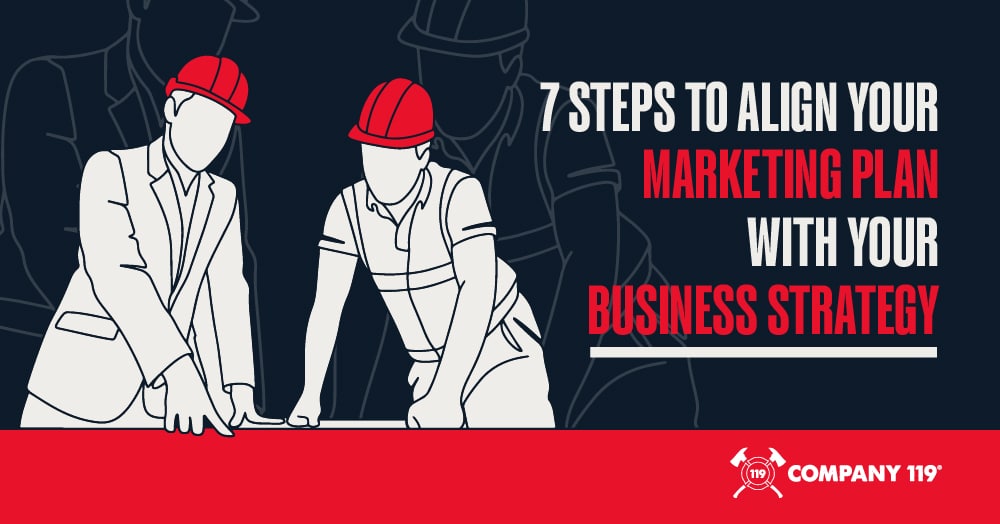
Marketing without a clear connection to your business goals is just noise. And for construction contractors, that kind of misalignment isn’t just inefficient—it can cost you real opportunities. If your digital marketing efforts aren’t driving the right leads, supporting your growth targets, or reinforcing your brand in the market, it’s time to rethink your game plan.
Building a marketing plan that aligns with your business strategy means more than picking a few channels and hoping for the best. It starts with getting clear on where you stand and where you want to go. That means understanding your competitive landscape and defining what success actually looks like—whether that’s more RFPs, stronger client relationships, or a bigger presence in your target markets.
From there, it’s all about setting the right KPIs, choosing tactics that match your goals, and tracking your progress. Successful marketing isn’t about flashy ads; it’s about strategy, precision, and results. When marketing and business strategy work in sync, growth becomes a lot more predictable—and a lot more powerful.
Before diving into your marketing plan, conduct a SWOT analysis to identify your company’s strengths, weaknesses, opportunities, and threats—and be honest. Are you known for technical expertise, safety standards, or on-time delivery? That’s a strength. Do you have an outdated online presence, or are you struggling to compete in certain markets? That’s a weakness. Opportunities could include growing demand in specific sectors or geographic expansion, while threats might be rising competition or economic shifts.
This will form the foundation of your strategy. A solid SWOT analysis reveals where you can leverage construction marketing to highlight your strengths, fix your weak points, and stay ahead of external risks. It keeps your messaging focused and your tactics grounded in reality.
Now that you know what your strengths and weaknesses look like, it’s time to define marketing objectives that directly support your firm’s growth and revenue targets. After all, marketing should never exist in a vacuum, and your goals need to reflect and support your broader business objectives. For example, if your firm wants to expand into government contracts, your marketing should focus on credibility, compliance, and visibility in that space. If you’re trying to land more commercial projects, you might target high-end developers or architects.
Set SMART goals—specific, measurable, achievable, relevant, and time-bound. A goal like “Increase inbound leads by 20% in six months” gives your marketing team something concrete to work toward. Clarity here drives alignment, making sure every marketing activity ties back to the outcomes your business cares about.
For construction and engineering contractors, knowing your audience goes beyond basic demographics. You need to understand who makes the buying decisions—owners, developers, project managers, or procurement officers—and what motivates them. Do they care about cost-efficiency, innovation, safety records, or timelines?
Dig into customer profiles, buyer journeys, and market trends. Ask your sales team the right questions. Review past project data. This insight allows you to tailor messaging, choose the right channels, and present your firm as the perfect fit for the projects you want. Trust us: Precision beats guesswork every time.
Your brand is more than your logo and color scheme; it’s your reputation in the field. To build a brand in a competitive market, you need to get clear on your value and make sure your brand shows up strong, consistent, and memorable everywhere. Strong construction marketing highlights what sets your firm apart—whether that’s decades of experience, cutting-edge tech, specialized services, or an unbeatable safety record.
Define your brand voice, core messages, and value propositions. Then, make sure they show up consistently across your website, proposals, social media, signage—every touchpoint. Strategic brand positioning helps you attract the right clients, win better contracts, and build long-term trust.
Not every channel fits every firm. Your engineering marketing plan should prioritize the platforms that matter most to your audience. A mix of digital (SEO, paid ads, email campaigns, social media), traditional (trade shows, print ads, direct mail), and relationship-driven tactics (referrals, partnerships, networking) usually works best.
For example, if your target market includes government agencies, you might invest more in thought leadership and industry-specific publications. If you’re after commercial developers, you may need a strong online presence and case studies that speak their language. Pick channels with purpose, not just because everyone else is using them.
If you’re not measuring it, you can’t improve it. Key performance indicators (KPIs) will help you track what’s working—and what’s not. Depending on your goals, KPIs might include lead conversion rates, website traffic, proposal win rates, or engagement on project updates.
Set realistic benchmarks based on industry standards, past performance, or growth targets. Regularly review these numbers and use the insights to adjust tactics. Marketing for engineering and construction contractors needs to be just as precise as your project planning—and that means treating data like gold.
No plan should sit on a shelf. Schedule regular check-ins (monthly or quarterly) to assess progress, review metrics, and refine your strategy based on what you learn. Market conditions change. Competitors shift. Your own business priorities may evolve. Your marketing strategy should flex with them.
Stay proactive, not reactive. Continual improvement is the key to long-term alignment between your marketing and business strategy. When the two work together, you’re not just getting more visibility. You’re getting the right visibility, with results that move the needle.
When your marketing plan is on the same page as your business strategy, every dollar spent works harder, and every message hits closer to home. In AEC marketing, this kind of alignment isn’t optional—it’s how you stay competitive, win better projects, and grow with intention.
Ready to put your plan into action? At Company 119, we help engineering and construction contractors develop data-driven, strategy-aligned marketing that actually delivers. Contact us today to get started.