
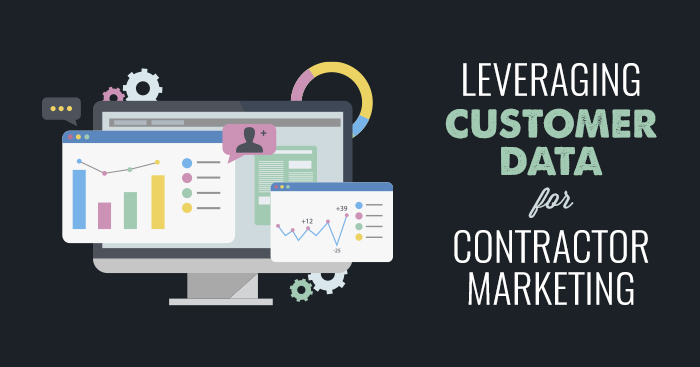
When it comes to marketing, knowledge is power. And in a time when customer experience is critical to the success of your business, there’s nothing more important than data.
Your prospects have more data at their fingertips than ever before. They’re researching your business and checking out the competition without ever picking up the phone or talking to a sales rep. They’re adjusting their expectations of your products, services, and customer experience—a phenomenon heightened by customers expecting every company to deliver the same comprehensive experience as Amazon.
But there’s good news: Information is the secret to contractor marketing success. Just like your prospects are accessing information about your business, you can tap into the data available at your own fingertips to transform your customer experience.
According to a 2018 survey by Econsultancy and Adobe, 65 percent of respondents say that data analysis drives a better customer experience. What’s more, 86 percent of customers will pay a higher price for a better experience—and 73 percent cite CX in buying decisions.
At the same time, 80 percent of customer data is untouched, meaning it’s never actually used to improve the customer journey. Customer data is the tool you need to dominate the competition, but you need to leverage the full power of your customer database to drive results.
So, what are you waiting for? Here’s how to build a powerful customer database so you can develop smarter campaigns, build stronger customer relationships, and keep the phone ringing.
Just like your prospects, your contractor business has access to more data than ever before. There’s transactional, demographic, and behavioral data, all with different levels of personalization—from past purchases to the interactions customers have had with your company. Why not use that data to fuel your marketing campaigns?
Data-driven marketing helps contractors identify what works, what doesn’t work, and how to optimize their marketing efforts to drive the most conversions. Customer data gives you the insights you need to identify customer success, learn from it, and strengthen your marketing efforts.
So, how exactly can customer data impact your digital marketing strategy? Here are a few benefits of data-driven marketing:
Customer data is evolving—and you need to start building a customer database to keep up with the competition, deliver a streamlined customer experience, and grow your contractor business with a steady stream of leads. Data on your customers’ preferences, interests, and web history is constantly updated and stored. With the right tools, you can use this data to adapt your marketing strategy and close more sales.
If you want to engage with prospects and keep your appointment book full, you need to start analyzing your customer data.
The good news? Customer data can come from just about anywhere. From transactions in your CRM system to customer interactions with sales reps, your contractor business has access to a wealth of information about your customers. You just have to figure out what information is relevant to your marketing efforts so you can use it to your advantage.
Here’s how to start collecting information from customers to build a database that can be managed and marketed to.
At the highest level, customer data can be divided into two categories:
Now, let’s break those categories down into specific types of data you should be collecting:
If you’re a digital marketing pro, you’re probably already familiar with customer relationship management (CRM). CRM systems store customer data, both qualitative and quantitative, to provide easy access to customer insights for your sales and marketing teams.
Customer data is collected from your website, email marketing provider, social media platforms, and PPC campaigns. Today, with so much data coming from multiple sources, customer data platforms have entered the market.
Let’s get one thing clear: A customer data platform (CPD) isn’t the same thing as a CRM. CRMs are designed to create profiles of your clients. So, what’s the difference? It’s simple: CRMs focus on customer management and customer-facing interactions, while CDPs focus on customer data.
CRMs and CDPs aren’t mutually exclusive, and our clients have reaped the most benefits using both. CRM data can give you a prospect’s name and their interaction history with sales. Meanwhile, CDP data can tell you each specific step they’ve taken in your marketing funnel, from the channel they found you on to how they interact with your website. To get the most out of your customer data, you’ll want to use both in tandem.
Now that you have systems in place to collect and organize customer data, it’s time to start capturing leads. When your customer database needs a boost, lead generation should be your #1 priority. Here are a few strategies to build and strengthen your CRM and CDP databases:
Now that you’ve built your customer database, it’s time to tap into the full potential of your customer data. Remember: Customer data can transform your marketing strategy, but only if you’re actually using it. Here’s how to start leveraging your customer database for more personalized, impactful marketing.
You can’t build a high-performing pipeline without a strong customer database. Your end goal is to drive revenue, but you need to capture and nurture leads before they’re ready to convert.
So, how do you nurture and convert leads? Your marketing team needs to work with sales to optimize your marketing funnel. Both teams should agree on what constitutes a lead, and you should have a process for categorizing and scoring those leads. This way, your sales reps can leverage marketing data to prioritize high-quality leads with targeted sales techniques.
What’s the secret to email marketing success? Segmentation. Make sure you’re grouping customers into relevant segments to send the right message at the right time. Segmenting is a relatively simple tactic, but it can skyrocket your conversion rates.
You can segment your audiences by location, what services they’re interested in, and more. The further you segment your audiences, the more targeted your messaging will be—and you’ll be able to maximize engagement for every email you send.
Programmatic advertising uses targeting and retargeting to get your brand noticed by the right people at the right time. With data-driven programmatic buying, you can integrate segmented audience data into your programmatic campaign. This way, you can serve ultra-relevant ads to hyper-focused audiences across different mediums.
Programmatic is one of the most effective marketing strategies for contractors—but data is your secret weapon to driving the right traffic at the right time. If you’re new to paid search, you can start a programmatic campaign with the Google Ads Display Network.
Some marketing platforms automatically change the content of your landing pages, emails, SMS texts, and more based on the buyer persona, their past digital activities, and other data points. For example, you might create home remodeling landing pages that target different pain points—from wanting a family-friendly home to impressing your neighbors. Dynamic content allows you to serve specific landing pages depending on what type of user visits your website.
The best part? Dynamic content can help you upsell and cross-sell services to make the most of every conversion. In turn, you’ll boost engagement and conversion rates by leveraging data from your customer database.
Leveraging customer data shouldn’t end with digital marketing. You’re already segmenting audiences and building buyer personas based on your customers’ locations, demographic information, and interests. Why not use that data to fuel your traditional marketing campaigns?
If you want to make the most out of every marketing campaign, cross-reference these data points by publications, radio stations, and TV programs to target the right audience. Ask traditional media companies about their reach and demographics. Then, create lookalike audiences to make the most of your marketing budget.
Ultimately, successful data-driven marketing solutions come from fine-tuning customer data and taking a creative approach to the customer journey. With more marketers relying on customer behavior to guide their strategies, a strong customer database is the tool you need to outpace the competition.
Are you ready to make the most of your customer data? We’re here to answer any questions you have about data-driven contractor marketing—from finding the right CRM to getting started with personalization. Reach out to our team to start leveraging the power of customer data.