
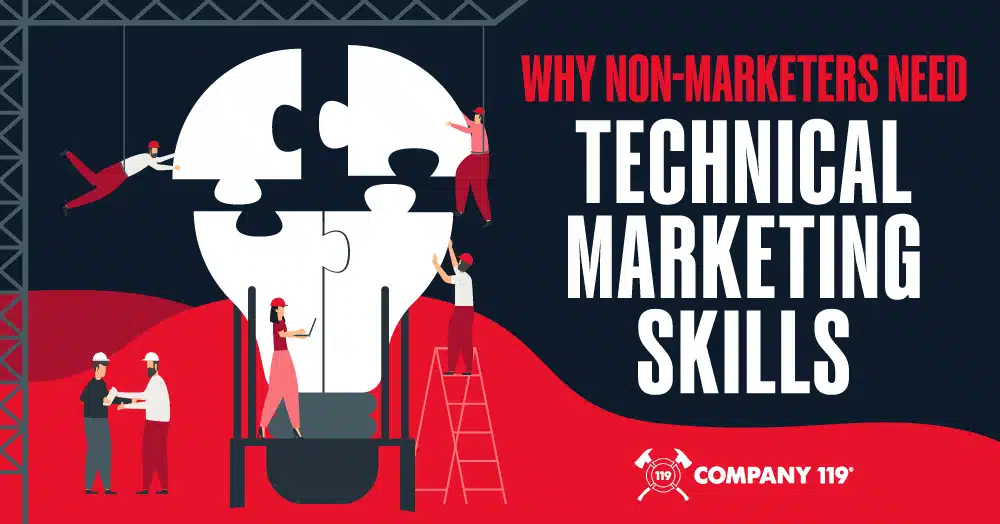
Let’s face it: Marketing isn’t just for marketers anymore. If you’re in communications, proposals, or any role that involves getting your company noticed, you’re already doing marketing whether you realize it or not. And in today’s digital world, just having a way with words isn’t enough. You need to understand how those words perform online—how they rank in search engines, drive engagement, and convert readers into customers.
The good news? You don’t need to be a full-time marketer to build technical expertise. A little knowledge of website optimization, search engine optimization (SEO), and digital strategy can take your work from good to game-changing. In this guide, we’ll break down how you can sharpen your technical skills, even if your background has nothing to do with algorithms or analytics. Here’s how to make your content work smarter.
If you work in communications, proposals, business development, or any role that involves shaping your company’s message, you’re already influencing how your brand is perceived online. But without technical marketing skills (see: SEO, website optimization, and digital strategy), you’re leaving a lot on the table.
Think about it: A well-written proposal is great, but if potential clients can’t find your company’s services online, you’re missing out. A compelling company story is powerful, but if it’s buried on a poorly structured website, it won’t get the attention it deserves. And with more decisions being made based on online searches and digital engagement, professionals in non-marketing roles need to understand how to create content that not only sounds good but also performs well in search engines and drives real results.
By adding technical marketing skills to your toolkit, you can ensure your content isn’t just well-crafted—it’s also discoverable, strategic, and impactful. Whether it’s learning how to optimize web pages, write with SEO in mind, or leverage digital analytics, these skills can help you amplify your efforts and bring more value to your organization.
This is especially true in industries like commercial contractor marketing, where visibility in search results and a strong digital presence can directly impact business growth and client acquisition. When decision-makers research potential contractors, an optimized website and a data-driven marketing strategy can give your company a competitive edge. This way, you can make sure your proposals and qualifications reach the right audience and stand out from the competition.
So, what skills do you need to make the most of your marketing efforts and stay competitive? Whether you’re optimizing a website, managing social media, or leveraging data analytics, having a solid grasp of these strategies can make a major impact on your organization’s visibility and success.
Contrary to popular belief, website optimization is more than just making sure your pages load quickly. It’s about creating a seamless, user-friendly experience that encourages visitors to stay on your site longer, navigate easily, and take action. This involves improving things like site structure, making sure your content is easy to find, and enhancing your call-to-action (CTA) buttons. An optimized website helps potential clients find the information they need quickly and move through the sales funnel with ease.
Not sure where to start? Mobile optimization is paramount for professionals like commercial contractors, with a significant portion of web traffic coming from mobile devices. If your website isn’t mobile-friendly, you risk frustrating users and losing business. And remember: Website optimization is also an ongoing process. You’ll need to track your site’s performance and continually test new updates to improve your conversion rates and user satisfaction.
Following SEO best practices ensures your website is discoverable by search engines and ranks well in search results. This involves optimizing on-page and off-page elements. On-page SEO includes optimizing your content with relevant keywords, using proper headings, and properly tagging images and videos. Meanwhile, off-page SEO involves improving your site’s credibility and authority through backlinks—links from other reputable websites that point to yours.
For those in non-marketing roles, understanding the basics of SEO is crucial. By learning how to incorporate SEO into your day-to-day work—whether you’re writing proposals, blog posts, or web content—you can drive more organic traffic to your site and increase visibility in search engines. Since SEO is an ongoing process, staying up-to-date on the latest trends and Google algorithm updates can help maintain your website’s ranking over time.
Think of a digital strategy as a roadmap that defines how your business will use digital channels to achieve its goals. For non-marketers, this skill helps you align your day-to-day tasks with broader objectives. A strong digital strategy considers all the digital channels your company uses, including your website, social media, email, and paid advertising. Understanding how these elements work together can help you create more cohesive, targeted campaigns that support your business’s long-term goals.
A clear digital strategy allows you to focus your efforts on the most effective tactics, so you’re not just creating content or executing campaigns for the sake of it. Whether you’re working on proposals, communications, or client outreach, integrating a digital strategy into your work can ensure that your efforts are part of a larger, cohesive plan that drives measurable results.
Content marketing involves creating valuable content to engage your target audience. Whether it’s blog posts, case studies, eBooks, or videos, content marketing helps build trust with your audience, educate potential clients, and position your company as a thought leader. For professionals in non-marketing roles, content marketing can be a great way to connect with clients and prospects while adding value to your brand’s overall messaging.
When you understand the principles of content marketing, you’ll be able to create value-driven content and strategically distribute it to the right audience at the right time. With a good content strategy, you can nurture leads, support SEO efforts, and contribute to an inbound marketing approach that attracts prospects to your business rather than pushing them with traditional sales tactics. This is key in commercial contractor marketing, where building trust through informative content can build trust and drive long-term client relationships.
Digital marketing without analytics is like flying blind. Analytics helps you understand how your digital efforts are performing, which aspects of your strategy are working, and where you can improve. Google Analytics is one of the most widely used tools for tracking website traffic, user behavior, and conversion rates. Learning how to interpret this data allows you to make informed decisions about which content, campaigns, or tactics drive the most traffic and engagement.
For those in non-marketing roles, getting comfortable with basic data interpretation can help you refine your efforts and provide valuable insights for the larger team. Tracking metrics like email open rates, website visitors, and social media engagement can help guide your decisions and achieve better results.
Mastering technical marketing skills is essential for anyone looking to enhance their business impact. For commercial contractors, strong marketing tactics can mean the difference between winning and losing bids, as visibility and credibility play a crucial role in client acquisition.
If you’re ready to take your commercial contractor marketing to the next level, Company 119 can help. Our team specializes in tailored marketing strategies designed to drive real results. Contact us today to learn how we can optimize your digital presence and set your business apart.