
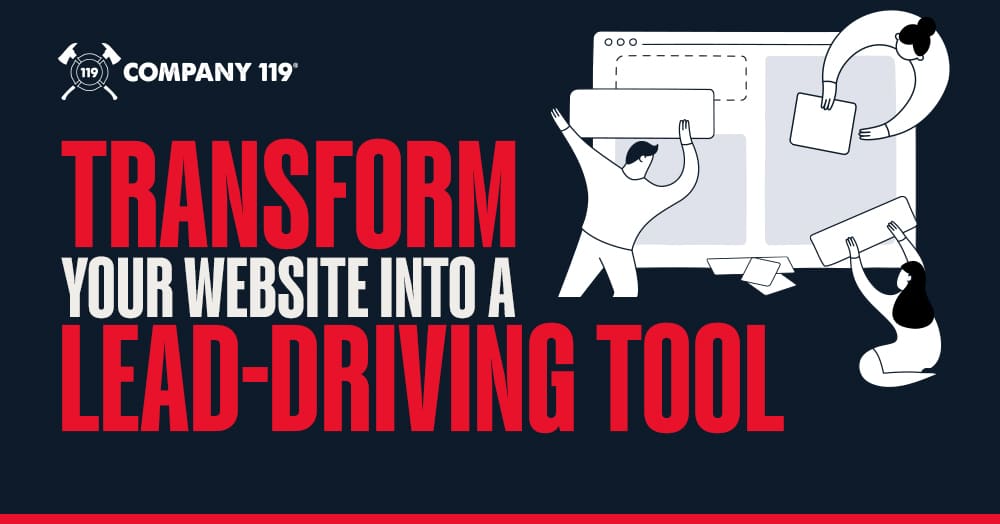
Let’s face it—most websites are just sitting there looking pretty. They might have the right colors, a clean layout, maybe even a slick company overview video. But when it comes to actually supporting your sales team? Crickets.
As a commercial contractor, your website should be one of your hardest-working sales reps. We’re talking about tracking visitor behavior, scoring leads based on intent, and serving up content that speaks directly to where buyers are in their journey. With the right commercial contractor marketing strategy at your fingertips, your website becomes a tool that not only attracts attention but actively moves prospects closer to a “yes.”
If your site isn’t helping move people down the funnel, it’s time for a redesign. Let’s break down how to turn your website into a true sales asset—one that works with your team, not just alongside it.
A beautiful website might grab attention, but looks alone won’t convert visitors into leads. Before diving into colors and layouts, get crystal clear on what your site is supposed to do. Are you trying to generate inbound leads? Educate prospects? Drive demo bookings or product trials? For commercial contractors, a high-performing website isn’t optional—it’s essential. Start with a clear understanding of your goals, and let those shape your content, structure, and user experience.
Think of your website as your digital storefront. It should guide visitors through a logical path that mirrors your sales process. Every button, page, and section should exist for a reason, whether that’s supporting conversions, offering value, or collecting useful data. Without a customer experience (CX) strategy, even the best design is just window dressing.
Lead scoring helps your sales team focus on the people who matter most. By assigning points to specific lead behaviors (like visiting your pricing page or downloading a whitepaper), you can automatically identify which visitors are showing real buying intent. This kind of intel is gold because it ensures your sales reps aren’t wasting time chasing unqualified leads.
With tools like HubSpot, you can customize scoring criteria based on your buyer journey. Once a lead reaches a certain score threshold, you can trigger automatic alerts to the sales team or shift them into a more targeted nurture sequence. It’s like giving your reps a heads-up on who’s warming up and ready to talk.
You can’t improve what you don’t understand. Use tools like Google Analytics to monitor how people are engaging with your website. Where are they clicking? Which pages keep their attention, and which ones make them bounce? These insights help you optimize content and layout to keep users engaged and moving toward conversion.
For example, if you notice people are spending time on your product page but rarely clicking the CTA, that’s a red flag. Maybe your call-to-action isn’t compelling enough, or maybe you’re missing a key piece of information. When you understand how visitors are interacting with your content, you can refine your approach and improve performance over time.
Content is only powerful when it aligns with what your audience actually wants to know. Instead of pushing generic blog posts, focus on addressing real questions your buyers are asking commercial contractors. This could mean building out comparison pages, publishing detailed case studies, or writing how-to guides based on specific pain points.
Your goal is to position your site as a helpful, trusted resource—not just a sales pitch. When prospects find content that speaks directly to their needs and stage in the buyer journey, they’re more likely to stick around, engage, and convert. Bonus: this kind of content also arms your sales team with helpful material to share in their outreach.
Your website and your sales team should be in sync. Sales reps are on the front lines: they know what questions leads are asking, what objections come up, and what information helps close deals. Use that intel to shape your website content and layout. If your team keeps getting asked about pricing or how your solution compares to a competitor, turn those conversations into on-page resources.
This alignment also helps fuel consistency across the buyer experience. When your site messaging and your sales conversations are telling the same story, you build more trust and reduce friction. Regular check-ins between marketing and sales can spark ideas for new landing pages, lead magnets, or FAQs that directly support the sales process.
It’s time to stop relying on weak call-to-action phrases like “Contact Us.” Instead, specific, benefit-driven language that gives the visitor a reason to click. Think “Get Your Free Demo,” “Download Our Comparison Guide,” or “See the Results.” These types of CTAs make it clear what the visitor is getting and why it’s worth their time.
And remember: placement matters. Don’t bury your CTA at the bottom of the page and hope people scroll far enough to find it. Include them at strategic points throughout your content—at the top, in the middle, and alongside high-intent sections like pricing or case studies. The easier it is for someone to take action, the more likely they will.
Sometimes, a visitor is ready to talk, but they don’t want to fill out a form and wait three days for a reply. That’s where live chat or AI-powered chatbots come in. They can engage users in real-time, answer quick questions, and route high-intent prospects directly to your sales team.
Chat tools like Intercom can be set up to trigger based on behavior, like someone spending more than a minute on your pricing page. You can customize conversations to qualify leads on the spot and even book meetings automatically. It’s a fast, low-friction way to move people from interest to conversation.
One of the best ways to earn trust (and generate leads) is by offering something useful before you ask for anything in return. This could be a free resource, a trial, a calculator, or an in-depth guide. When you provide upfront value, you demonstrate expertise and start building a relationship before the sales pitch ever begins.
Lead magnets work especially well here, especially when it comes to commercial contractor marketing. For example, a downloadable buyer’s guide or industry-specific checklist can capture emails while delivering value. It’s a win-win—your visitors get something helpful, and your sales team gets warm leads who’ve already shown interest.
Your website is never truly “done.” The best-performing sites are constantly being tested and improved based on user behavior and performance data. Run A/B tests on your headlines, CTAs, form lengths, and landing page layouts. Try different copy variations or value propositions and see what converts best.
Use the results to guide ongoing optimization efforts. Maybe shorter forms lead to more submissions, or a video explainer increases demo bookings. Don’t rely on guesswork. Instead, let data show you what works. Continuous improvement ensures your site keeps getting better at supporting sales over time.
Your website is a powerful sales tool that can drive growth, build trust, and convert leads into loyal clients. By strategically optimizing your site, you can make sure it works for your contractor business—not just with it.
Ready to turn your website into your sales MVP? Reach out to Company 119 for tailored commercial contractor marketing that gets results. We specialize in transforming contractor websites into lead-generating machines—let’s build your next big opportunity together.