
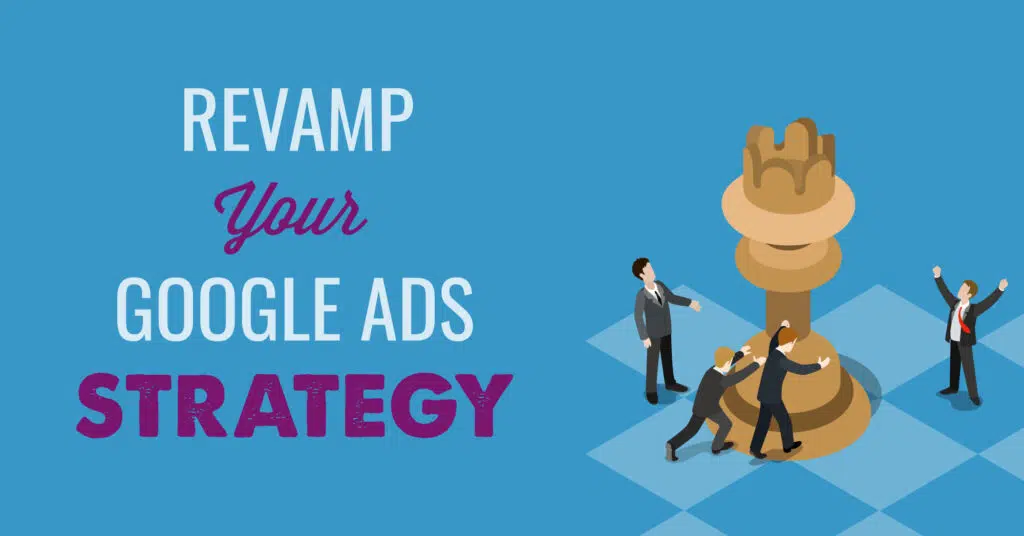
Launching a Google Ads campaign might feel pretty straightforward. And, for the most part, it is—but there are a few common pitfalls that can leave you trailing behind the competition.
When done right, Google Ads can be a powerful advertising strategy for HVAC contractors. It offers countless ways to customize your ad campaigns to reach local homeowners when they need you most. For marketing pros, customization options are the best way to ensure all ad campaigns are focused on the right objective. But for others, launching a well-oiled ad campaign can feel overwhelming—which can lead to mistakes, dead-end campaigns, and lost money.
The good news? You’re going to take a different approach. You’re going to run toward the fire with an effective Google Ads strategy, and that means overcoming the mistakes that your competitors are probably making. Here are some of the biggest mistakes in HVAC Google Ads campaigns—and how to fix them to gain an edge over the competition.
Conversion tracking matters. After all, you’re running Google Ads campaigns to grow your HVAC company—whether that involves driving more sales, getting more attention from local homeowners, or generating more website traffic. You need to measure your progress toward those goals to successfully optimize your ad strategy.
So, why is conversion tracking so important for Google Ads? Maybe you’re trying to drive more traffic to your HVAC company’s website, but that doesn’t mean each pageview should automatically qualify as a conversion. Unless you’ve installed conversion tracking, you won’t be able to see how many of those website visits are actually converting into sales. You need to rely on real data, and that’s where conversion tracking can save the day.
Instead of tracking pageviews and hoping for the best, it’s time to set up conversions to track high-value actions (see: actions that bring leads closer to a sale), like completing an online form. Conversion tracking involves keeping count of all of the completed conversion actions assigned to your account, and which ads are responsible for them, so you can fine-tune your ads to reach their full potential.
How to fix it: Get specific with your conversion actions. Start by choosing high-priority goals that will move your business forward (think: getting 10 new email subscribers each month).
This way, you can optimize your ad campaigns based on their current performance and track the right actions to measure their success. With the right information at your fingertips, you can make the right adjustments to your keyword strategy, budget, bidding, and more to maximize the success of your ad campaigns. Then, you can apply the same strategies to other campaigns that need improvement. Sounds like a win-win, right?
This might be the most common Google Ads mistake we’ve seen: sticking to the default settings. While we usually advocate for reviewing the recommendations given by advertising platforms, this isn’t one of those cases. Even if you need fresh HVAC leads right now, you’ll need to take the time to review your campaign settings before launching your next Google Ads campaign.
For example, Google automatically includes the display network in every search campaign unless you change the default settings, which isn’t the best (or most profitable) choice for most HVAC ads. If you stick to the default settings, Google can also add new keywords to your campaigns, tweak your cost per acquisition (CPA) targets, and even target traffic outside of your targeted locations if those searchers might be interested in your location.
Remember: It might be fairly easy to set up your Google Ads account, but you’re still advertising through Google. Their main goal is to generate revenue, so most of their default settings focus on spending every penny of your advertising budget.
How to fix it: Turn off the automated recommendations before launching your Google Ads campaign. Take the time to do your homework, allocate your marketing budget, and research the right keywords for your marketing goals. It might be time-consuming, but it’s well worth it.
Instead of reverting to auto-bidding, specify bids when you create ad groups to make the most of your budget. When it comes to bidding, there are two primary factors to consider:
Once you’ve launched your campaign, set a reminder each month to log in to your Google Ads account to review Google’s suggestions. You can dismiss any recommendations that don’t make sense for your campaigns and review the ones that might drive better results based on your current data.
This ties into our last point since broad match is Google’s default when it comes to keyword matching, but trust us—it deserves its own spot on the list. When you add new keywords to your ad campaign, Google automatically adds them as broad match (the loosest match type). We’ve seen clients apply broad match keywords without playing around with other match options, and it’s usually the biggest money-sucking mistake of their campaigns.
Now, let’s take a step back: How exactly does match type affect your keyword strategy? In a nutshell, keyword match types determine what kind of audience you’ll serve ads to.
Finding the right match types can be tricky. If you match keywords too loosely, you risk wasting money on irrelevant searches and clicks that will never convert into paying customers. On the other hand, if you match your keywords too closely, your ad might not actually show up for any searches. Here, your goal is to strike the perfect balance so you’re reaching potential leads searching for HVAC providers in your service area.
How to fix it: Be selective about the match types that you use for keyword targeting. To choose the best option for each keyword, you’ll want to consider the context of each term and the type of searches you want to match each specific keyword to.
The most important component of your keyword strategy? Negative keywords. They’re used to exclude search terms so you won’t have to worry about showing up (or paying for) when users search for certain keywords. If you’re showing up for irrelevant searchers, review your campaign performance and fine-tune your match types based on Google’s keyword matching guide.
It might be tempting to copy your competitor’s ad tactics, but remember: Even if they have a Google Ads strategy, that doesn’t mean that it’s working. That said, your local competitors can be a good starting point for identifying gaps in your keyword coverage and brainstorming fresh ideas.
Reviewing your competitor’s ad strategy can help you optimize your own. It can help you identify keywords you’re already ranking well for, determine where your competitors stand, and pinpoint what kind of messaging they’re using to captivate their audience. Plus, you can set yourself apart with a unique value proposition and make sure you’re not saying the exact same thing in your ads.
How to fix it: Stop sleeping on the competition. To be successful in the world of Google Ads, you need to keep tabs on your biggest competitors—and that starts with a competitor analysis. Fortunately, there are tons of free benchmarks for data available to Google Ads users so you can find out how you stack up against the competition. You’ll want to start with:
At the end of the day, Google Ads can be an amazing strategy for HVAC contractors—helping you amplify your lead generation efforts, drive brand awareness, and reach more homeowners. The catch? Most campaigns are built wrong and do more harm than good. Sometimes, even the smallest mistakes can cost you thousands of hard-earned marketing dollars.
When you’re ready to take a different approach to PPC, we’re here to help. At Company 119, we’ll create a customized marketing strategy to get your business in front of local homeowners when they need your services so you can keep your appointment book full. Reach out to our team to start brainstorming your new Google Ads strategy.