
How can you stop wasting hard-earned marketing dollars on people who will never convert? Two words: programmatic advertising. If you’re not harnessing the power of programmatic to reach the best audience for your contractor ads, there’s a good chance you’re pouring time, money, and resources into the wrong audience.
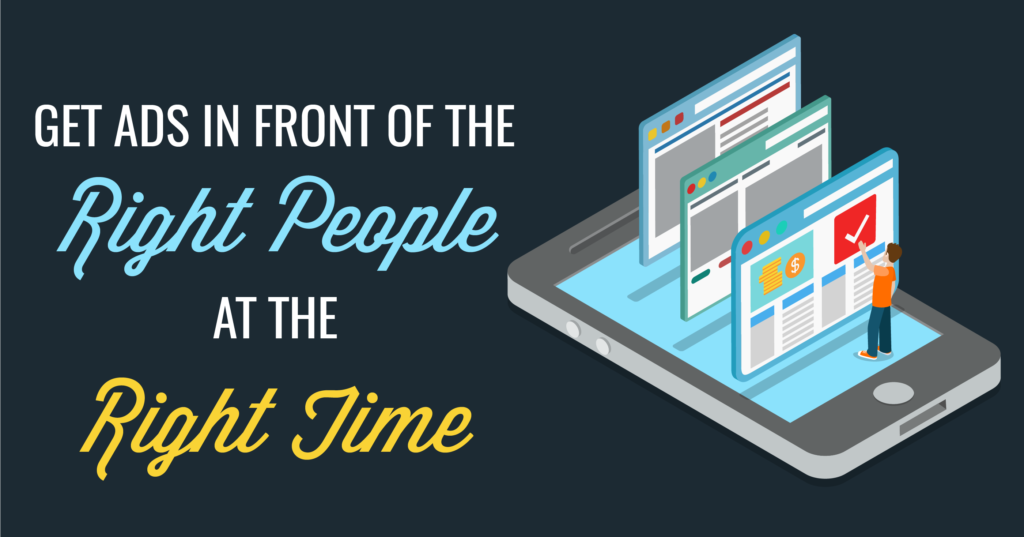
Programmatic advertising might sound intimidating, but it’s not rocket science. It’s a data-driven digital marketing strategy to boost your conversion rates by putting your ads in front of the right people at the right time. Sounds simple enough, right?
It’s time to stop throwing away resources on ineffective campaigns. With the right targeting tactics at your fingertips, you can put your business in front of local homeowners when they need you most. Here’s how to transform your ads into lead magnets with effective targeting.
When it comes to programmatic, the right targeting strategy ensures you serve ads to the people most likely to want what you’re selling (that is, local homeowners shopping for home services). You can set up targeting using available customer data on specific demographics, buying preferences, and consumer behaviors to serve hyper-relevant ads to specific segments.
For example, let’s say your company sells roofing services and you’re marketing to Cleveland homeowners in their 30s and 40s. With programmatic ad targeting, you can create a segment of relevant customers and then funnel your messaging to this specific group. This way, you’ll get the best bang for your buck by advertising to the people who are most likely to convert.
Now that you know how programmatic works, it’s time to start brainstorming your strategy. If you want to successfully target local homeowners and drive more conversions, you’ll need to choose the right targeting strategy based on your marketing goals and ad budget.
While each targeting technique varies slightly based on your desired goals, they all have one thing in common: They’re customer-focused so you can deliver hyper-relevant messaging and be there when they need you. Here’s a rundown of the best targeting methods in programmatic.
Audience targeting is one of the most popular types of ad targeting—and for good reason. It’s a simple way to target specific customers based on key characteristics like gender, household income, interests, and age. In other words, it’s the targeting strategy you need to get in front of your dream customer.
Audience targeting leverages first-party and third-party data to create audience lists. Then, you can buy these audience lists and create compelling ads based on your buyer personas. If you know who you want to reach but don’t know how to reach them, audience targeting is the answer.
Just as the name suggests, contextual targeting is all about context. By using data to determine what types of content appear on the websites people are viewing, contextual targeting serves relevant ads alongside articles—usually on editorial websites.
Behavioral targeting serves ads based on consumer behaviors (think: shopping habits and website interactions). This way, you can learn more about your target customers and serve ultra-personalized ads based on their lifestyles.
Behavioral targeting is more powerful than you might think. It considers what people do on web pages, such as adding items to a cart, filling out forms without completing them, or sharing links with others. Instead of simply serving ads to potential leads, behavioral targeting considers why your ads will resonate with certain people.
Geotargeting adds an extra ingredient to your targeting strategy—location. It delivers highly specialized and targeted messages based on behavioral profiles layered onto a geographic area.
With geotargeting, you can refine your target audience down to the ZIP code. Instead of creating blanket ad experiences for your entire audience, you resonate with customers and boost conversions with personalized experiences based on geographic location.
If you’re like most people, you’ve already seen retargeting ads in action. You’re shopping online for a pair of sneakers, and now every website has ads for the same pair of shoes.
Sure, ads that follow you around the web might seem annoying, but studies show that retargeting is actually pretty effective. In fact, 90 percent of marketers say retargeting is as effective as the gold standard in digital marketing: search ads.
With programmatic, you can evaluate individual users who have already visited your website to serve ads to the people most likely to convert. Plus, you’ll stay top of mind and reignite their interest in your brand, which can help you get the most value out of every lead you’ve captured.
Cross-device targeting serves targeted ads to prospects across multiple devices based on how and why they might be using a specific device. With over 300 million smartphone users in the U.S. and 74 percent of adults owning a laptop or desktop, cross-device targeting lets you reach customers as they transition between different devices.
Think of cross-device targeting as a subtype of retargeting. It serves retargeting ads on one device, knowing prospects have already visited your website or checked out your ads on another device.
As a marketing agency, our clients often come to us thinking they know their target audience. But sometimes, the leads who actually end up converting into paying customers are completely different—and that’s where programmatic can save the day.
With smart targeting, you won’t have to worry about advertising to people who will never convert. Plus, you can tailor your messaging strategy to different segments throughout the sales funnel, which can also boost your conversions.
Unlike traditional forms of advertising, programmatic delivers powerful messaging at the individual level so you can be there when homeowners need you most. And it’s made possible by data—customer insights that help you make informed marketing decisions. Without the right data, targeting would be like trying to find a needle in a haystack.
So, how can you find your target audience? And how can you use customer insights to ignite your paid ad campaigns? Here’s everything you need to know about customer data to fuel your contractor business with click-worthy ads.
First-party data is data that your company has collected. It includes data on previous customers, followers, contacts, and website visitors across different devices. It can also include non-digital data, such as completed surveys and customer feedback.
If you’re using customer relationship management (CRM) software, you probably already have tons of first-party data available. Otherwise, you’ll probably need to take steps to collect insights.
First-party data should be your go-to for programmatic targeting. Why? It’s simple: It’s unique to your brand, so you won’t have to worry about competitors targeting the same audience. It’s also the most reliable source of information—and, most importantly, it’s free. At the end of the day, first-party data is the tool you need to monetize, learn from, and use data to target your ideal customers, drive engagement, and maximize your ROI for PPC and beyond.
Second-party data is another company’s first-party data. The seller collects data straight from their audience, so you can feel confident about its accuracy. Generally, you’ll purchase second-party data directly from the owner. You might get it through industry contacts, partnerships, or data exchanges.
Second-party data isn’t used as frequently as first- and third-party data, but it can be an effective way to expand your reach—especially if you find the right dataset. Plus, second-party data is typically less expensive and more exclusive than third-party data.
Third-party data is sold by outside sources who don’t originally collect the data. You can buy it through data exchanges, demand-side platforms, or data management platforms. If you don’t have first-party data at your disposal, third-party data can help you build a powerful campaign.
The downside? It’s not as targeted as other types of data, but it’s still an efficient way to reach new prospects and expand your reach into new audience segments. And remember: The data isn’t exclusive. Since it’s publicly available, your competitors might have access to the same data you’re already using to craft programmatic ads.
When it comes to marketing, data can be your MVP. Why? It paints a picture of your perfect customer and helps you spend less money to reach them. And the more data you have at your disposal, the better chances you have at honing in on the right audience.
Customer data becomes even more valuable when you can add additional datasets to your user profiles. Over time, you’ll create an incredibly powerful targeting strategy and make the most of programmatic.
When you’re ready to run toward the fire with programmatic, we’d be happy to share more about our work with Pristine Clean, The Gutter Boys, and other clients in the home services industry. Reach out to our team to learn more.